
Maintenance and long-term planning · 5 min read
What should a scheme check when a roof or gutter leaks?
A roof or gutter leak needs a traceable inspection of source, water path, prior repairs and access before anyone promises that a patch will last.
In short
A scheme should check where and when water appears, the roof and gutter condition, junctions, falls, outlets, flashing, downpipes, prior repairs, safe access and damage along the water path. Record evidence before repair, separate temporary protection from diagnosis and request a scope that explains testing, making good and handover.
Key takeaways
- The visible stain is rarely enough to identify the source of a roof leak.
- Inspect junctions, outlets and water paths, not only the damaged room.
- A roof repair scope should define access, testing, protection and close-out evidence.
A ceiling stain tells you where water became visible, not necessarily where it entered. Roof sheets, flashings, parapets, gutters, outlets, downpipes and plumbing penetrations can send water along a hidden path before it appears indoors. A scheme should therefore investigate the source and route, record the condition and define the repair before asking for a permanent quote.
One roof-leak illustration is a 36-unit block where a top-floor passage stains after summer storms. The gutter above it was cleaned twice, a flashing was sealed last year and the ceiling has been repainted. A new patch would be the fastest visible response, but not necessarily the right one. The file needs rain dates, photographs, roof access notes, prior invoices and a focused inspection.
Protect the area before tracing
If water is near electrical equipment, stored goods, occupied rooms or slippery walkways, make the immediate area safe within the authority available. Protect contents, control access and capture the condition before it changes. Temporary covers, isolation or other urgent measures should be recorded as protection, not described as proof of the cause.
At the site, the managing agent can arrange a dated photograph, place a warning and check whether water is reaching a light fitting. Trustees then see the immediate risk and the remaining decision. A permanent repair should wait for the right inspection unless delay would worsen the condition.
- Location and room or common-area identifier
- Date, weather and duration of water entry
- Wide and close photographs
- Electrical, access and stored-content risk
- Temporary action and authorisation
Inspect the whole water path
The inspection brief should cover the likely entry points and the route to the visible damage. On a roof, that may include covering, laps, flashings, parapets, penetrations, gutters, outlets, valleys, falls and adjacent work. At ground level, check downpipe discharge, blocked drains, paving levels and splashback. Ask whether the same condition appears elsewhere, because repetition can point to a system issue.
Record the limits of the inspection. A roof may be unsafe to enter during rain, a locked unit may prevent access to a ceiling void and a concealed junction may require a separate opening-up decision. These limits should appear in the report rather than being mistaken for evidence that no defect exists.
Do not let a provider inspect only the ceiling below because that is where the complaint started. Access, fall protection and weather conditions may limit what can be concluded on the day. The report should state what was inspected, what was inaccessible, what was observed and what test or return visit is recommended.
Read the old repair properly
Prior work is evidence, not a guarantee. Find the old scope, invoice, photographs, product information, warranty and date the leak returned. Ask which area was opened or tested, which items were excluded and whether the repair addressed a junction or only sealed a visible gap. Repeated patching may show that the cause was not established, not that the last provider was careless.
In the example, the previous flashing seal may be intact while water enters at a blocked outlet. Or the stain may be from a plumbing penetration below the roof. A current inspection should compare the earlier scope with the present condition. This saves trustees from approving the same narrow response for a third time.
Define the repair and making good
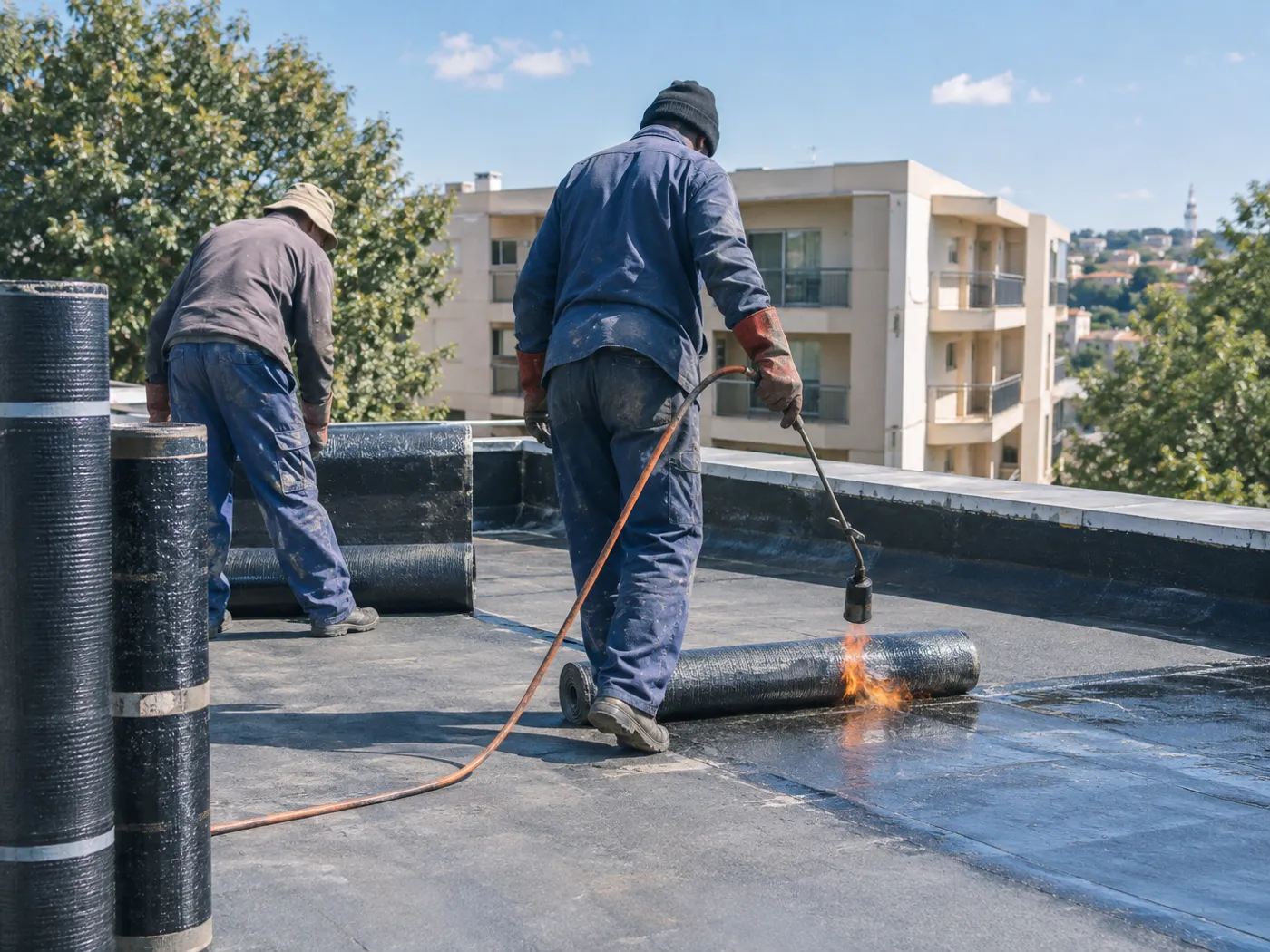
Once the source is understood, write a scope with preparation, materials or system, access equipment, protection, weather limitations, testing, removal, waste, reinstatement and warranty requirements. State whether interior plastering and painting are included or will follow after the roof is proven dry. Make the boundary between roof work and internal repair explicit.
Water can travel behind insulation, ceilings and wall finishes, so the inspection should note the path as well as the entry point. Ask whether the roof has safe access, whether gutters can be observed during flow and whether a controlled test is appropriate. If the specialist cannot reproduce the leak on the visit, the report should say what conditions were absent and how the scheme will gather better evidence. This avoids treating a dry inspection as proof that the defect has disappeared.
A comparable roof scope helps the committee decide, while the appointed roofing provider remains accountable for its method, work and warranty. We can coordinate the assessment and place responses together. The scheme retains the appointment and payment decision.
Close the leak file with proof
Close-out should show the inspected areas, before and after photographs, test or observation results, repairs completed, materials or system information, warranty, remaining moisture or monitoring instruction and the next inspection date. Do not repaint the stain and call the leak resolved without evidence that the source was addressed.
A leak history is an asset. Keep every recurrence, location, weather note and prior scope in one record. This week: find the last roof or gutter repair, write down the date the problem returned and photograph the visible condition from a wide and close view. Ask for an inspection scope that names the water path, access and close-out record.
What you get
What you get from Dev 360 One
- Leak evidence brief
- Locations, dates, photographs, prior work, immediate risks and unanswered source questions organised for review.
- Roof and gutter inspection scope
- Water paths, access, junctions, outlets, testing limits and reporting requirements clearly defined.
- Comparable repair options
- Methods, protection, access, reinstatement, warranties and exclusions placed on one decision sheet.
- Leak history and handover file
- Reports, photographs, repairs, test evidence, warranties and monitoring instructions retained for future trustees.
Questions
Should a scheme repair the ceiling first?
Usually the water source should be addressed before permanent internal making good. Temporary protection may be needed immediately, but repainting a stain before proving the roof or gutter is dry can hide a recurring defect.
Can gutter cleaning solve a leak?
It can remove a blockage, but the scheme should record the condition, check falls and outlets and monitor whether water returns. Cleaning alone does not establish that flashing, roof covering or discharge arrangements are sound.
What should a roof repair warranty cover?
Ask the provider to state the area, work, exclusions, duration and maintenance conditions in writing. The specialist remains responsible for its technical warranty; the scheme should retain the document with the handover record.
Keep reading